2026 Deep Dive: Data Center Development Trends in Malaysia
 Tham Wei Han - Senior Practice Leader, PeopleFirst Malaysia
Posted On 1 October 2026
Tham Wei Han - Senior Practice Leader, PeopleFirst Malaysia
Posted On 1 October 2026
Malaysia has topped Knight Frank’s Data Centre Opportunity Index for the SEA-5 markets two years running, and the investment pipeline shows little sign of slowing. Hyperscalers, colocation providers and sovereign AI builds are drawing on the same small pool of engineers who can design, commission and run these facilities. That pressure now shows up in pay, in hiring speed and in how far candidates are willing to move.
The Market at a Glance
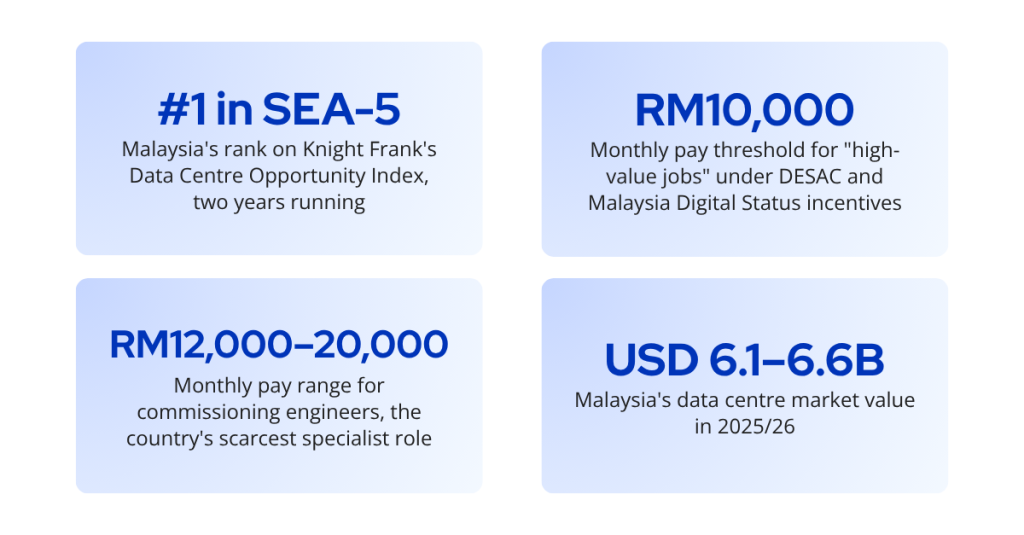
Behind these numbers is a workforce split between where experienced professionals live and where new capacity is rising. Klang Valley and Cyberjaya hold the deepest bench of mid-to-senior talent, while Johor is scaling faster than its resident workforce can keep up. Penang offers strong electrical and mechanical engineers, though most were trained for semiconductor fabs and need deliberate reskilling before they can step into data centre roles.
Key Takeaways for Hiring Leaders
- Benchmark against semiconductor pay. Critical facilities and semiconductor engineers now earn within 1% of each other on average.
- Build offers around RM10,000. The DESAC incentive threshold now shapes how mid-to-senior packages are structured.
- Grow leaders through mobility. Structured moves across MEP, Projects and Operations ease future senior shortages.
- Treat expatriate hires as bridges. Pair every imported specialist with a knowledge-transfer and localisation timeline.
The full 2026 Malaysia Data Center Talent Trends Report covers talent across five hubs, salary benchmarks for 16 roles and the emerging positions reshaping the sector. Click here to download the full insight.