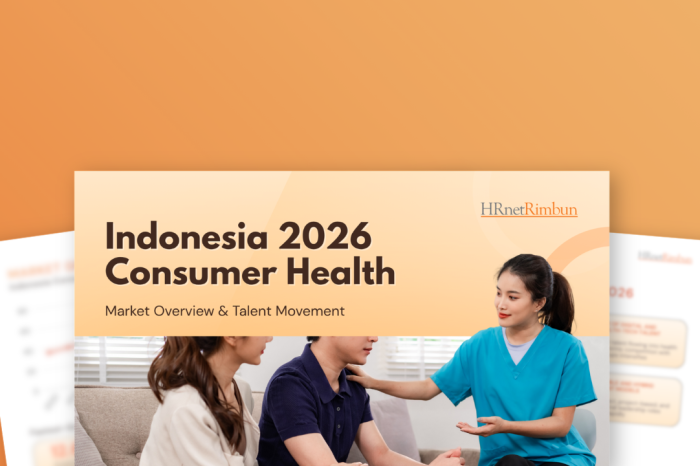
The Shifting Shelf of Indonesia’s FMCG Talent: 2026 FMCG Talent Movement Report
 Rubby Lim
Posted On 6 May 2026
Rubby Lim
Posted On 6 May 2026
A USD 60 billion market is reshaping its workforce in real time. The 2026 FMCG Talent Movement Report maps six structural shifts redefining who gets hired, who gets kept, and what it costs to compete.
The market is growing. The workforce is moving. The question for every FMCG company in Indonesia is not whether talent will shift, but whether they are positioned to win when it does.
A Market at Full Speed
Indonesia’s FMCG sector entered 2026 in strong form, and the numbers are not subtle about it.

But beneath the growth story, a structural tension is building. The workforce required to sustain this pace is harder to find, quicker to leave, and more expensive to attract than at any point in recent memory.
Six Talent Movements Defining 2026
When enough hiring decisions point in the same direction, they stop being coincidences and start being indicators. Six of those indicators have defined Indonesia’s FMCG talent market in 2026, and each one reflects something real shifting beneath the surface of the sector.
- The Hybrid Talent Gap
The most in-demand commercial profiles in 2026 are not specialists. They are people who can operate across all three channels simultaneously, and the market is pricing that accordingly. - Field Sales to Omnichannel
Warung expertise still has value. It just no longer travels as far up the career ladder as it once did. - The Rise of Revenue Growth Management
RGM has quietly become one of the most competed-for career tracks in the sector. Where that talent is coming from, and what companies are paying to secure it, tells a specific story. - Halal and ESG Expanding Existing Roles
The October 2026 halal certification deadline is not creating new headcount. It is expanding the scope of roles that already exist, often without expanding the compensation to match. - Cross-Sector Leakage to Tech and Startups
FMCG is losing a specific cohort to tech and startups, and it is not the most junior or the most senior. The gap it leaves is harder to fill than most companies have accounted for. - Globalisation of Talent Pools
The talent pool is no longer just local. Whether that works in a company’s favour depends entirely on how well-positioned they are to compete for it.
The Cost of Competing
One number defines the 2026 hiring climate better than any other: 57% of FMCG professionals expect a salary increase of 20% or more when they move. Counter-offers are rising in response. Retention is not. The question is no longer whether compensation pressure is real. It is whether companies are responding to the right problem.
What This Means for Hiring Strategy
These are not temporary pressures. The talent market has recalibrated, and the companies responding well are doing so with a clear view of where the gaps are and what to prioritise.
The The Shifting Shelf of Indonesia’s FMCG Talent: 2026 FMCG Talent Movement Report covers the practical implications, from workforce planning to EVP to salary benchmarking, for teams that need to act now.
What the 2026 FMCG Talent Movement Report Covers
- Six talent movement trends across key FMCG functions
- Attrition data by experience band and sector
- October 2026 halal deadline: workforce implications
- Salary guide across seven FMCG functions
- Adaptation strategies from leading companies
- Key player mapping across Indonesia’s FMCG landscape